Key Takeaways
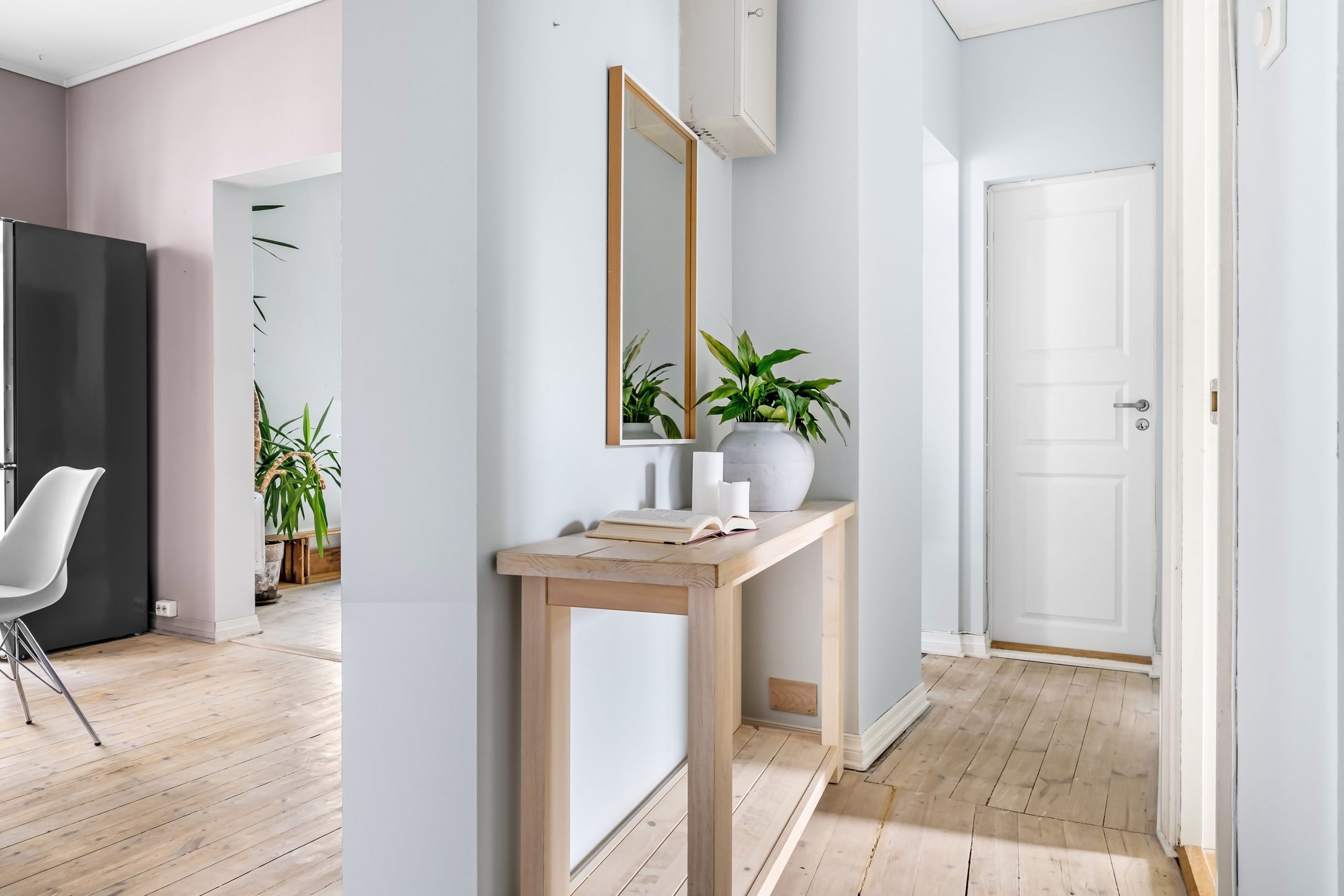
- A fresh coat of paint can make a narrow or dark hallway feel brighter, cleaner, and more welcoming.
- Gallery walls, mirrors, and accent walls add personality without taking up valuable floor space.
- Better lighting can improve both the appearance and everyday function of a hallway.
- Updating worn trim, doors, hardware, and baseboards can give the space a more polished look.
- Runners, plants, and simple decorative details can introduce color and texture without overwhelming the hallway.
- Wall hooks, narrow shelves, benches, and console tables can provide practical storage when space allows.
- Keep the final design simple, maintain clear walking paths, and choose durable materials that can handle frequent traffic.
Hallways are often treated as spaces you simply walk through. Because they are usually narrow and do not contain much furniture, decorating them may seem less important than updating a living room, bedroom, or kitchen. However, a hallway can have a big effect on how your home looks and feels.
A few simple changes can turn a plain hallway into a brighter and more welcoming part of the house. You do not necessarily need expensive furniture, major construction, or professional design services. Paint, artwork, lighting, storage, and small decorative details can make a noticeable difference.
The key is to work with the size and purpose of the space. A narrow hallway needs different solutions than a wide entry hall. You also need to consider how much foot traffic the area receives and whether you need storage, better lighting, or simply more visual interest.
Many hallway projects are manageable DIY updates that can be completed gradually. Start with the improvements that solve practical problems, then add decorative elements that reflect your style.
Here are simple ways to decorate a hallway without making the space feel crowded or spending more than necessary.
1. Start With a Fresh Coat of Paint
Paint is one of the easiest ways to change the appearance of a hallway.
Because hallways often receive limited natural light, wall color can have a strong effect on how the space feels. Light colors such as warm white, soft beige, pale gray, or muted cream can help a narrow hallway feel brighter and more open.
That does not mean you have to avoid darker colors. Deep blue, green, charcoal, or other rich shades can create a dramatic look, especially in a hallway with good lighting. You could also use a darker color on one wall while keeping the remaining walls lighter.
Before painting, repair small holes, dents, and cracks. Clean the walls and protect floors, trim, switches, and nearby surfaces.
Consider how the hallway connects to surrounding rooms. The color does not need to match every room, but it should work with the colors visible from the hallway.
A fresh coat of paint can also cover scuffs and marks that naturally develop in high-traffic areas.
2. Create a Simple Gallery Wall
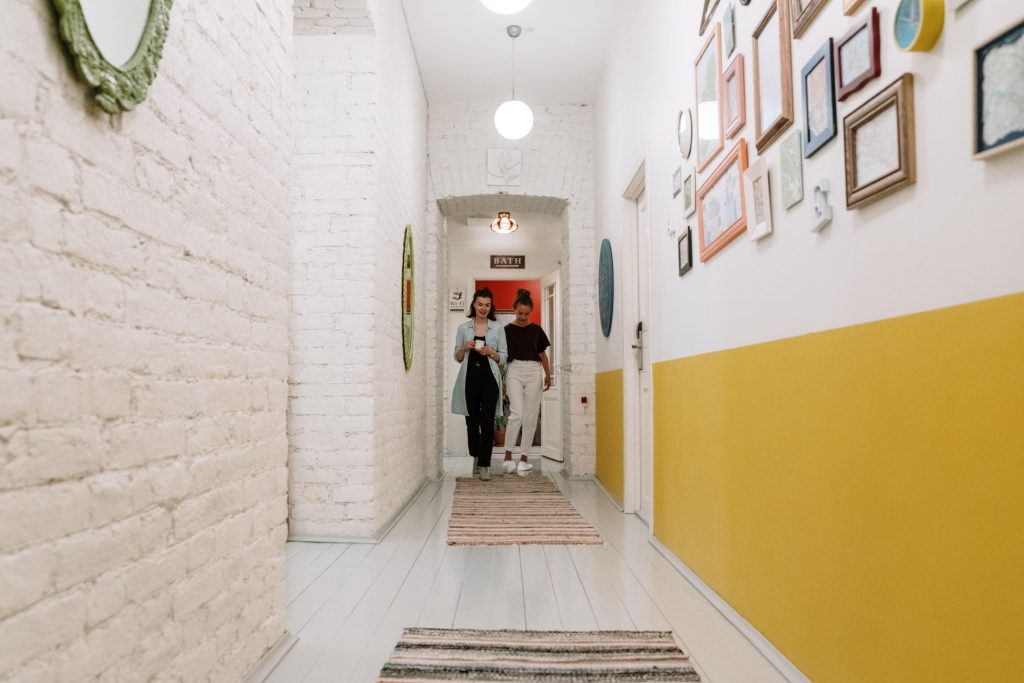
A gallery wall can make an empty hallway feel personal without taking up floor space.
Use family photographs, artwork, prints, postcards, children’s drawings, or other pieces that have meaning to you. You can choose matching frames for a neat appearance or mix different styles for a more relaxed look.
Before putting holes in the wall, arrange the frames on the floor. This lets you experiment with spacing and placement.
Another option is to cut paper into the sizes of your frames and temporarily tape the pieces to the wall. You can then adjust the layout until it looks balanced.
Keep the center of the display near a comfortable viewing height. In a long hallway, you might spread several pieces across the wall rather than grouping everything in one small area.
Avoid filling every available inch. Leaving some open wall space helps individual pieces stand out and keeps a narrow hallway from feeling too busy.
3. Add a Mirror to Make the Space Feel Larger
Mirrors are especially useful in small or dark hallways.
A mirror reflects light and can make a narrow space feel more open. It can also serve a practical purpose near an entryway, where you may want a quick look before leaving the house.
Choose a mirror that fits the scale of the wall. A large mirror can become a focal point, while several smaller mirrors can create a decorative arrangement.
Think carefully about what the mirror will reflect. Positioning it across from a window or attractive room may increase brightness and visual interest. A mirror facing a cluttered storage area may have the opposite effect.
You can also update an existing mirror instead of buying a new one. Painting or refinishing the frame may help it coordinate with your hallway.
Always use mounting hardware that is appropriate for the mirror’s weight and your wall type.
4. Improve Hallway Lighting
Poor lighting can make even a nicely decorated hallway feel dull.
Start by checking whether your existing light fixtures provide enough illumination. Cleaning dusty shades and replacing burned-out bulbs may produce an immediate improvement.
If the fixture looks outdated, replacing it can also change the style of the hallway. Flush-mount and semi-flush fixtures work well in many spaces because they do not hang too low.
Wall sconces can add both decoration and extra light when the hallway has enough width. Battery-operated or rechargeable lighting may provide an option in certain locations where adding new wiring is not practical.
Pay attention to the color temperature of your bulbs. Warmer light often creates a comfortable atmosphere, while cooler light can feel brighter and more energizing.
Electrical projects should match your skill level. If installing a fixture requires changes to wiring and you are not qualified to perform the work safely, hire an appropriate professional.
5. Update Baseboards, Trim, and Doors
Hallway walls are not the only surfaces that influence the appearance of the space.
Baseboards, door frames, and interior doors can become scratched or dirty because hallways receive regular traffic. Cleaning or repainting these surfaces can make the entire area look fresher.
White or light-colored trim can create a clean contrast against colored walls. For a more modern look, you could paint doors or trim in a deeper coordinating shade.
Before replacing trim, consider whether the existing material simply needs minor repairs and paint. Reusing materials when possible can support budget-friendly property care while still improving the appearance of the space.
Replace damaged hardware when necessary. New door handles, hinges, or hooks can provide a subtle update without requiring a complete door replacement.
Small finishing details may not seem important individually, but together they can make the hallway appear much more polished.
6. Use a Runner to Add Color and Texture
A hallway runner can introduce pattern, warmth, and softness.
Choose a size that leaves some flooring visible along the edges. A runner that is too wide may make the hallway feel cramped, while one that is too small can look disconnected from the space.
Consider durability as well as appearance. Hallways usually receive frequent foot traffic, so look for materials that are appropriate for regular use and reasonably easy to clean.
Color and pattern can also help hide everyday dirt between cleanings. A heavily patterned runner may work well in a busy household, while a simple design can support a more minimal look.
Safety is important. Use a suitable rug pad or nonslip solution to help keep the runner from moving or creating a trip hazard.
If your existing flooring is attractive, you may decide to skip the rug entirely and let the floor become part of the hallway design.
7. Add Practical Wall Storage
A hallway can sometimes provide useful storage without needing bulky furniture.
Wall hooks can hold coats, hats, bags, umbrellas, or other frequently used items. A narrow shelf can provide a place for keys, small baskets, or decorative objects.
In an entry hallway, a simple wall-mounted organizer can create a designated place for mail and other items that often create clutter.
Keep the available walking space in mind. Shelves and hooks should not stick out so far that people regularly bump into them.
If the hallway is very narrow, focus on flat or shallow storage. Even a few well-placed hooks can be more practical than adding a cabinet.
Avoid turning every wall into storage. Too many visible items can make the hallway feel smaller and more cluttered.
The best storage solutions make daily routines easier while still keeping the space comfortable to walk through.
8. Try a DIY Accent Wall
An accent wall can add personality without requiring you to redesign the entire hallway.
Paint is the simplest option. Choose one wall or the far end of the hallway and use a contrasting color.
You can also create a basic pattern with painter’s tape. Simple stripes, blocks, or geometric shapes can provide visual interest without wallpaper.
Peel-and-stick wallpaper is another option for some surfaces. It is available in many colors and patterns, although results depend on wall texture, preparation, and product quality.
DIY wall molding can create a more traditional or detailed appearance. Simple rectangular trim patterns can make plain walls look more finished when measured and installed carefully.
A hallway accent wall can contribute to an interior home transformation because it changes a highly visible transition area without requiring updates to every room.
Keep the design appropriate for the size of the hallway. A very complicated pattern may overwhelm a narrow space, while a simpler design can add character without creating visual clutter.
9. Decorate With a Narrow Console or Bench
If your hallway is wide enough, a small piece of furniture can make the area more useful.
A narrow console table provides a surface for a lamp, tray, plant, or decorative objects. In an entry hallway, it can also provide a convenient place for keys and other everyday items.
A bench can offer seating for putting on shoes. Some benches include storage underneath, which can help organize footwear or seasonal accessories.
Measure carefully before buying or building anything. Leave enough open space for people to move through the hallway comfortably.
You may also be able to update furniture you already own. A small table can be painted, refinished, or fitted with new hardware to match the hallway.
Keep the top of the furniture relatively uncluttered. A few useful or decorative objects often look better than a large collection of small items.
10. Bring in Greenery Without Creating Clutter
Plants can add life and color to a hallway, but the available light should guide your choices.
If the hallway receives natural light, choose plants suited to those conditions. Avoid placing a plant in a dark hallway simply because it looks attractive in the store.
Wall-mounted planters or a small plant on a console can add greenery without using much floor space.
Artificial plants can also provide color where natural plants would struggle. Choose simple options that fit the scale of the space and remember to clean dust from them periodically.
Do not place large plants where leaves or pots block the walkway.
You can also use dried branches, flowers, or other natural materials in a narrow vase for a similar decorative effect.
A small amount of greenery is often enough to soften hard surfaces and make the hallway feel more inviting.
11. Use the End of the Hallway as a Focal Point
The wall at the end of a hallway naturally attracts attention.
Instead of leaving it empty, use it as a focal point. Hang a large piece of artwork, a mirror, a framed photograph, or a small collection of coordinated pieces.
You could also paint the end wall in a different color to create depth.
If there is enough space, a small table or plant may work below the wall decor. However, avoid placing furniture where it interferes with doors or walking paths.
A focal point can make a long hallway feel more intentional because it gives the eye a clear destination.
Keep the design simple. One strong decorative feature may have more impact than several unrelated items competing for attention.
12. Keep the Final Design Simple and Functional
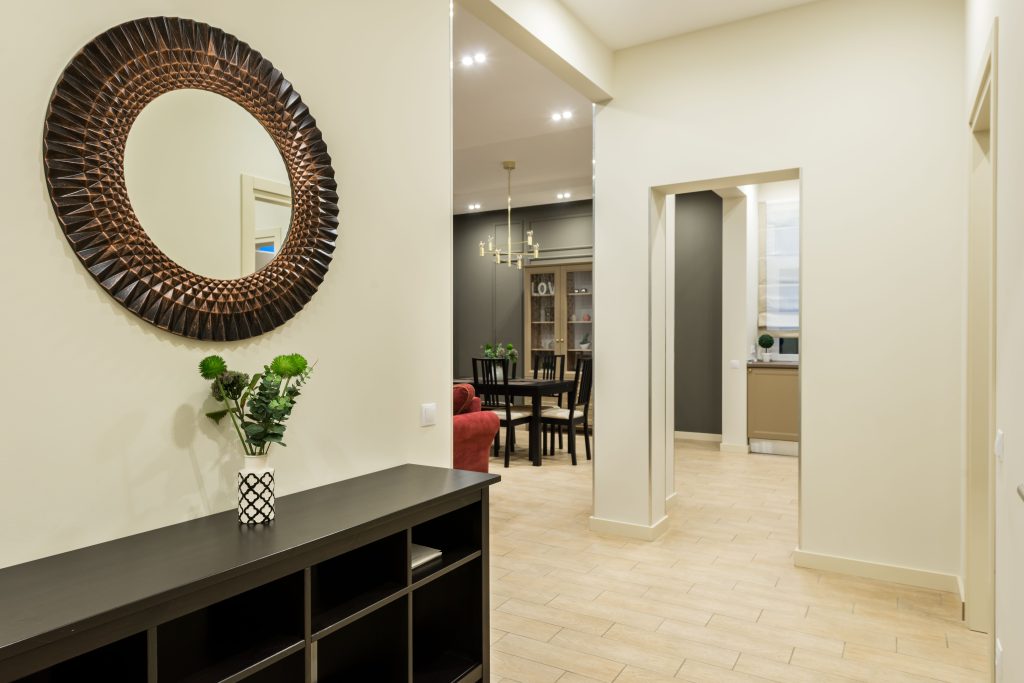
It is easy to overdecorate a hallway because empty walls may seem like they all need something.
In reality, hallways usually benefit from some open space. Too many frames, shelves, rugs, plants, and decorative objects can make a narrow area feel crowded.
Choose a few elements that serve a clear purpose. For example, you might combine fresh paint, a runner, several framed photographs, and improved lighting.
Think about your household’s daily routines as well. If people frequently drop shoes and bags in the hallway, practical storage may be more valuable than additional decorations.
Use materials that can handle regular cleaning and everyday contact. High-traffic areas often need more maintenance than decorative spaces that are rarely used.
Step back occasionally while working on the hallway and look at the entire area. Removing an item can sometimes improve the design more than adding another one.
A successful hallway should look attractive while remaining easy and comfortable to use.
Conclusion
A hallway may be a transition space, but it still contributes to the overall appearance of your home. With a few simple DIY projects, you can make it feel brighter, more organized, and more connected to nearby rooms.
Start with basic improvements such as paint, lighting, and repairs to worn trim. Then consider decorative additions such as artwork, mirrors, a runner, or a simple accent wall. If the hallway needs to serve a practical purpose, wall hooks, shallow shelves, or compact furniture can provide storage without taking over the walkway.
You do not need to complete every update at once. Working on one project at a time allows you to see how each change affects the space before adding something else.
Most importantly, avoid sacrificing function for decoration. Keep walking paths clear, choose secure mounting methods, and use durable materials that can handle daily traffic.
With thoughtful planning and a few manageable DIY updates, even a plain hallway can become a useful and attractive part of your home.